Showing posts with label west. Show all posts

Thursday, August 13, 2009

How 1857 changed world history …

A war of a different kind

During the 1857 War against the colonial rule of Britain in India, unable to gain military advantage, British armed forces started using Indian human populations as human shield. For each military success of the Indian armies, the British armies exacted retribution on the local non-combatant populations.

This reign of terror and brutality on home populations disarmed Indian armies and ended the war. A impressive work on this period is by Amaresh Misra – a film critic and journalist, who was moved sufficiently to research for a few years, because, “Since 1957, no Indian has written a comprehensive account of the Revolt. Indian historians have done a limited work”. Another step in this direction is Parag Tope’s forth coming book, Operation Red Lotus, on the life and wars of Tatiya Tope.

And Britain started a more insidious war – a propaganda war. History started getting twisted, perverted, mutilated – and over the next 100 years, Indian and world history was changed beyond recognition.

Let the games begin

After 1857, racist propaganda and cultural baggage came covertly – to gain better traction at home and in the colonies. For instance, Priya Joshi, a researcher shows that after 1857, book shipments from Britain to India increased by a factor of three.

The death of Semiramis

In this propaganda campaign, the most interesting bit is the cold-blooded murder of the historical Semiramis. Readers will find that Semiramis as an Assyrian Queen till the 1850-60 period Western histories.

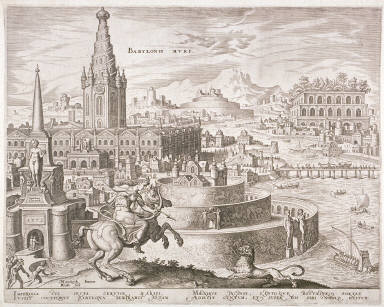
Edward Degas and Guercine made Semiramis the subject of their paintings. Calderon used her character in his plays. Mozart died before he could complete his melodrama based on Semiramis. A 16th century painter, Philip Galle used Semiramis and Babylon as the subjects of his paintings.

Mired in legend and prejudice, Semiramis is discredited in modern Western history – especially starting from 1853-1857. Her very existence denied, accused of incest, Semiramis has been tarred and condemned to the rubbish heap of modern history – and the Bible. Semiramis established an empire that lasted, practically till WW1. Some 300 years, after the reign of Semiramis, the Assyrian Empire passed into Persian hands. From the Persians, into Alexander’s lap.

Suddenly, from 1860 onwards, Western history started treating Semiramis as a wanton, decadent, probably mythical, a perverted sluttish character.
The reason. Semiramis biggest defeat was at the hands of Indians. And soon after her defeat was the defeat of Cyrus the Great at the hands of Indians again. And before that were the Battles of Meggido and Kadesh, in which Indic armies confronted the Slave Empire of the Egypt. In colonial periods such an Indian history would have been very inconvenient for the Raj.

The Alexander mythos

Alexander’s raid of the Persian Achaemenid Empire, finally turned out to be a overthrow of the Achaemenid dynasty, usurpers of the Assyrian Empire. Unable to make headway into India, as the Indian Brahmins had helped and influenced Indian princes to organize and support the Indian war against Alexander. Greek sources cite, after this realization, at ‘The City of Brahmans’, Alexander massacred an estimated 8000-10,000 of these non-combatant Brahmans.

Alexander’s massacres in India, a colonial historian informs us (without naming a source), earned him an “epithet … assigned (to) him by the Brahmins of India, The Mighty Murderer.” This Indian Brahmanic characterization of Alexander, commonly taught to English schoolchildren and present in English college texts, as The Mighty Murderer, curiously disappeared from Western-English texts soon after 1860 – and instead now “a positive rose-tinted aura surrounds Alexander” … !

Since Indian texts were completely silent about the very existence of Alexander, colonial Western historians had a free run. Using hagiographic Greek texts as the base, Alexander became the conqueror of the world.

Max Mueller – Son of Hegel

Behind this propaganda was possibly a man who is much admired (wrongly) in India today – Max Mueller. For instance in Max Muller’s colonial propagandist history, when it comes to Indian triumphs over Semiramis, she becomes half legendary. Yet in another book, the same Semiramis becomes one of ‘the great conquerors of antiquity.’ In a matter of a few pages, he dismisses Indian history completely, in a half-Hegelian manner.

Aiding Max Mueller, English poets were press ganged into this propaganda war. Matthew Arnold wrote how, India, a ‘nation of philosophers‘, from

“The East bowed low before the blast
In patient, deep disdain,
She let the legions thunder past,
And plunged in thought again.”

Matthew Arnold’s influence in Indian education can be gauged by the fact that Indian-English language poetry was for long called derisively as “Matthew Arnold in a Saree”. Just before 1857 War, the works of another ‘influential’ poet, John Keats, became popular. In his hubristic haze, Keats wrote how,

The kings of Ind their jewel-sceptres vail,
And from their treasures scatter pearled hail;
Great Brahma from his mystic heaven groans,
And all his priesthood moans,
Before young Bacchus’ eye-wink turning pale.

Much of modern history’s debates and questions were born during this time – verily created to wage a propaganda war against India – and the world. India’s cultural stature in the pantheon of world’s societies was reduced to a minimal role – and the Greek Miracle was born.

In the dying days of the Raj

This propaganda war continued well for another 100 years. In the middle of WW2, Britain pulled out a general from the Italian theatre of war and sent him to India – to head colonial India archaeological operations.

One evening in early August 1943, Brigadier General Mortimer Wheeler was resting in his tent after a long day of poring over maps, drawing up plans for invasion of Siciliy. Mortimer Wheeler was invited to become the director general of archaeology by the India Office of the British government in its last years of rule in South Asia … Summoning a general from the battlefields of Europe was an extraordinary measure, an admission both of the desperate condition of Indian archaeology and an acknowledgment of its vital importance. (from The Strides of Vishnu: Hindu Culture … – Google Books).

Amazing!

Why would the glorious British Empire, on which the sun never set, struggling for its very existence, in the middle of WW2, suddenly pull a general back from the battlefield – and put him into archaeology! That too, Indian archaeology. Not Egyptian, not Greek! Especially, when it was clear, that they would be departing from India – sooner rather than later.

Considering what theories came from Mortimer Wheeler’s rather fertile ‘imagination’ and his rigourous archaeological process, in hindsight, from a Western perspective, this was sound decision. There may be the facile answer that the British were, after all ‘searching for history and truth’.

And it led Mortimer Wheeler to remark,

“They demonstrate with astonishing clarity the extent to which the brief transit of Alexander did in fact Hellenize almost instantly vast tracts of Asia populated previously by nomads or semi-nomads and villagers”

It is this one incident which possibly contains answers to many unanswered questions like: -

  1. The amount of energy expended by the West in defending the Aryan Invasion /Migration Theory,
  2. The lack of access to Indian scholars of the archaeological sites in Pakistan
  3. The many myths in Indian history
  4. The clues to the partition of India
  5. The dating problems

et al.

Just why did the world’s foremost imperial power, struggling for its very existence, suddenly pull a general from the battle field, in the middle of WW2 – and put him onto the job of digging dirt.

Only one explanation fits – it had to be a struggle for its own existence at a higher level!

Linguistics of the Jewish diaspora

Our knowledge of Jewish life in the second century B.C.E. comes mainly from Flavius Josephus (37/38-95/100 C.E.), the great Jewish-Roman historian who wrote in Greek, the scholarly language of his time. The hellenization of the Jews had been thorough.The King of Judea and the High Priest of Yahweh had Greek names. (page 240).

During the third century B.C.E., the Tobiads were the principal advocates of hellenization among the Jews (Grayzel 1969:49). The Jewish family called the Tobiads (the sons of Tobias) traced their ancestry to Tobias the Ammonite, governor of the Persian province of Ammon (now Jordan), east of Jordan River, during the tenure of Nehemiah in Judea in the fifth century B.C.E. One of them, Joseph ben Tobias, became very prominent during the second half of that century. (page 219).

By the beginning of the third century B.C.E. the Jews were being hellenized rapidly. They no longer spoke Hebrew or Aramaic, but Greek. Their religious services were conducted in Greek. Their personal Hebrew names were hellenized: Honio became Onias, Ezra became Esdras, Yeshua became Iesous (Jesus), and Joshua became Jason. Some Jews had Greek names only, such as Antigonus, Hyrkanos, Aristobolus, or Philon (Philo).The choice of such names by Jews for their children indicated the degree of their hellenization. (page 219).

During the reign of Ptolemaios Philadelphos (Ptolemy II, 308-246 B.C.E.), the Torah and other Jewish holy scriptures were translated into Greek by a synod of scholars. (page 215).

During the years that he was the High Priest and ethnarch (175-171 B.C.E.) Jason promoted Greek sports at the expense of Temple worship. Jason did not last long in the office of High Priest. He was unseated in 171 B.C.E. by Menelaos, a member of the noble Jewish Tobiads and a more extreme Hellenizer than Jason himself.(page 224-225).

By the first century, Greek had become the language of the Jews in the”diaspora”. The Jews of the Hellenic world spoke Greek the way present-day American Jews speak English. During the Greco-Roman and the Byzantine periods, from the late fourth century B.C.E., to the early seventh century C.E. most Jews were thoroughly Hellenized.(page 454).

By the third century B.C.E the Jews of Syria, Palestine, and Egypt had become thoroughly hellenized. They worshipped Zeus, Hera, and the rest of the Greek pantheon. There were images of Greek sun god Helios, the wine god Dionysos, and the demigod Heracles on Jewish synagogue floor mosaics at Sepphori an other Gallilean cities as late as the sixth century C.E. But the Orthodox Jews violently resisted Hellenism. The conflict between Helenism and Judaism, or rather between hellenized and Orthodox Jews, was to lead to major trouble in the second century BCE, after Palestine was captured from Egypt by the Seleucid Greeks of Syria. (page 215).

Just as in modern America most Jews use English rather than Hebrew in their religious services and rituals, so Greek was used by the Jews of Egypt, including Judea, in their religion (page 215).

Hellenic culture was much more attractive to the young Jews of Judea than the rigid strictures of their own religion. The Greek myths and deities, projections of the deepest infantile conflicts and family relations, etched into the unconscious mind of every person, deeply appealed to the people, just as the Canaanites myths had to their ancestors. The Tobiads led the wave of hellenization among the Jews. (page 220)

Jews always spoke the language of the land which was their home. When expulsions and persecutions eventually brought about a wider separation between the Jews and the non-Jews, the result was a growing dissimilarity between the intimate languages spoken by each group.(Grayzel quoted on page 458).

in the early fourth century, the Jews were divided into three main groupings. Those living in the Western Roman Empire of Italy, which comprised much of Western Europe, spoke mainly Latin, the lingua franca of the West, and the native European languages of the ethnic groups amongst whom they lived. The Jews of the Eastern Roman Empire of Byzantium, with its capital at Constantinople spoke mainly Greek, the language of the East. The Jews living in Sassanian Neo-Persian empire east of the Euphrates spoke mainly Aramaic. Hebrew continued to be spoken by Jewish scholars and by the people in their prayers. (page 337).

During the seventh and eighth centuries the lands inhabited by Jew in the Middle East and North Africa were conquered by the Muslim Arabs. Arabic became the language of the these Jews. (page 454).

Text extracts from A psychoanalytic history of the Jews By Avner Falk.

Judaism – an existential challenge

The Jewish population, followers of one of the oldest religions in the world, across countries and in Israel, today faces an existential challenge. With 0.25% of world population, i.e. less than 1.5 crore Jews left, in a world of more than 600 crore people, they have made enemies of their neighbours around their country.

The Jewish state, dependent on US largesse, hangs by a thin thread. Without Hitler, the world population of Jews would possibly have been not much better. Maybe 2.5 crores instead of 1.5 crores (at the risk of sounding insensitive). Maybe 0.5% of world population, instead of 0.25%. Also, must be remembered that Jewish studies in the modern context are affected by the ‘Jews as the eternal victims’ syndrome.

Genetic analysis of the Jewish populations

So, what is the reason for this fragile position of the Jewish population? One recent study states that

Admixture analysis based on binary and Y-STR haplotypes indicates a high mean proportion of ancestry from North African (10.6%) and Sephardic Jewish (19.8%) sources. Despite alternative possible sources for lineages ascribed a Sephardic Jewish origin, these proportions attest to a high level of religious conversion (whether voluntary or enforced), driven by historical episodes of social and religious intolerance, that ultimately led to the integration of descendants.

(from The Genetic Legacy of Religious Diversity and Intolerance: Paternal Lineages of Christians, Jews, and Muslims in the Iberian Peninsula by Susan M. Adams,Elena Bosch,Patricia L. Balaresque,Stéphane J. Ballereau,Andrew C. Lee,Eduardo Arroyo,Ana M. López-Parra,Mercedes Aler,Marina S. Gisbert Grifo,Maria Brion,Angel Carracedo,João Lavinha,Begoña Martínez-Jarreta,Lluis Quintana-Murci,Antònia Picornell,Misericordia Ramon,Karl Skorecki,Doron M. Behar,Francesc Calafell andMark A. Jobling, Copyright 2008 The American Society of Human Genetics, The American Journal of Human Genetics, Volume 83, Issue 6, 725-736, 04 December 2008).

Another study concludes that the Jewish population shares a high level of common paternal similarities.

Several lines of evidence support the hypothesis that Diaspora Jews from Europe, Northwest Africa, and the Near East resemble each other more closely than they resemble their non-Jewish neighbors. The only exception was the Ethiopian Jews, who were affiliated more closely with non-Jewish Ethiopians and other North Africans.

Second, despite their high degree of geographic dispersion, Jewish populations from Europe, North Africa, and the Near East were less diverged genetically from each other than any other group of populations in this study. At the most basic level, the genetic distances observed among Jewish and non-Jewish populations can be interpreted as reflecting common ancestry, genetic drift, and gene flow. The latter two processes will tend to increase genetic distances among Jewish populations, whereas admixture will also have the effect of decreasing genetic distances between Jewish and non-Jewish populations.

Our results suggest that common ancestry is the major determinant of the genetic distances observed among Jewish communities, with admixture playing a secondary role. (from Jewish and Middle Eastern non-Jewish populations share a common pool of Y-chromosome biallelic haplotypes By M. F. Hammer, A. J. Redd, E. T. Wood, M. R. Bonner, H. Jarjanazi, T. Karafet*, S. Santachiara-Benerecetti, A. Oppenheim, M. A. Jobling, T. Jenkins, H. Ostrer, and B. Bonné-Tamir)

Of course, it begs the question, was the Jewish population ever a significant part of global population? One writer who has addressed this question is James Carroll, in his book, Constantine’s sword. He estimates,

Jews accounted for 10 percent of the total population of the Roman Empire. By that ratio, if other factors had not intervened, there would be 200 million Jews in the world today, instead of something like 13 million. (He goes onto recount that the) potential demographic crisis facing the Jewish people is defined by the loss of the murdered millions, not only in the twentieth century, but in all others. (from Constantine’s sword By James Carroll, page 26-27, texts in brackets, mine).

Population growth and changes (of not just the Jews) are subject to interplay of complex demographic factors – like assimilation, disease, migration, reproduction rates and proselytization. Since these factors affect all human populations, further analysis of these factors may just reinforce current red herring theories.

Jews – the eternal victims?

Of course, Jews have not been the only population group in the world who have had to face the problems of epidemics, migration, assimilation, and conversion. What could have been a significant reason for the decline in the Jewish population over the centuries?

A 2ndlook at history points out (extracts above) that the Jewish populations gave up their language and culture ab initio. Within a few centuries of its foundation, they were giving up on their culture.

Interestingly, and apparently, language plays an important and crucial role in the expansion and growth of populations – as the Jewish case seems to suggest.

Those who don’t learn from history …

The Jewish history has invaluable lessons for Indians. For one, all those who think that English is God’s special gift to India (and mankind), should look at the eclipse of the Greek language. I am yet to discover the logic which shows that English will fare better than Greek, Spanish, Persian or Urdu.

Reducing the role of the Indian State

The massive subsidy given by the Indian state towards English language education needs to be phased out. Indian languages (all of them) should start getting back on their feet. The people of India, each individual will choose their language. No bureaucrat, politician, ‘intellectual’ will decide that. Finito. Completo. Terminato. Endlich. Eindig. ändlig.

The Indian language basket also calls for diversification. India needs to learn more foreign languages. The great ’software success story is actually two countries – US and UK who give between 70%-80% of Indian software business? This is coolie labour! We are missing out on the massive Japanese, French and the Spanish markets because we have not invested in those foreign languages. And we have missed out on computing in Indian languages, because we have not invested there either.

Saturday, August 8, 2009

A war of a different kind

A war of a different kind

During the 1857 War against the colonial rule of Britain in India, unable to gain military advantage, British armed forces started using Indian human populations as human shield. For each military success of the Indian armies, the British armies exacted retribution on the local non-combatant populations. This reign of terror and brutality on home populations disarmed Indian armies and ended the war

And Britain started a more insidious war - a propaganda war. History started getting twisted, perverted, mutilated - and over the next 100 years, Indian and world history was changed beyond recognition.

In fact, after 1857, racist propaganda and cultural baggage came covertly - to gain better traction at home and in the colonies. For instance, Priya Joshi, a researcher shows that after 1857, book shipments from Britain to India increased by a factor of three.

The death of Semiramis

In this propaganda campaign, the most interesting bit is the cold-blooded murder of the historical Semiramis. Readers will find that Semiramis as an Assyrian Queen till the 1850-60 period Western histories.

Suddenly, from 1860 onwards, Western history started treating Semiramis as a wanton, decadent, probably mythical, a perverted sluttish character.

Edward Degas and Guercine made Semiramis the subject of their paintings. Calderon used her character in his plays. Mozart died before he could complete his melodrama based on Semiramis. A 16th century painter, Philip Galle used Semiramis and Babylon as the subjects of his paintings.

Mired in legend and prejudice, Semiramis is discredited in modern Western history – especially starting from 1853-1857. Her very existence denied, accused of incest, Semiramis has been tarred and condemned to the rubbish heap of modern history – and the Bible. Semiramis established an empire that lasted, practically till WW1. Some 300 years, after the reign of Semiramis, the Assyrian Empire passed into Persian hands. From the Persians, into Alexander’s lap.

The reason. Semiramis biggest defeat was at the hands of Indians. And soon after her defeat was the defeat of Cyrus the Great at the hands of Indians again. And before that were the Battles of Meggido and Kadesh, in which Indic armies confronted the Slave Empire of the Egypt. In colonial periods such an Indian history would have been very inconvenient for the Raj.

The Alexander mythos

Alexander’s raid of the Persian Achaemenid Empire, finally turned out to be a overthrow of the Achaemenid dynasty, usurpers of the Assyrian Empire. Unable to make headway into India, as the Indian Brahmins had helped and influenced Indian princes to organize and support the Indian war against Alexander. Greek sources cite, after this realization, at ‘The City of Brahmans’, Alexander massacred an estimated 8000-10,000 of these non-combatant Brahmans.

Alexander’s massacres in India, a colonial historian informs us (without naming a source), earned him an “epithet … assigned (to) him by the Brahmins of India, The Mighty Murderer.” This Indian Brahmanic characterization of Alexander, commonly taught to English schoolchildren and present in English college texts, as The Mighty Murderer, curiously disappeared from Western-English texts soon after 1860 – and instead now “a positive rose-tinted aura surrounds Alexander” … !

Since Indian texts were completely silent about the very existence of Alexander, colonial Western historians had a free run. Using hagiographic Greek texts as the base, Alexander became the conqueror of the world.

Max Mueller - Son of Hegel

Behind this propaganda was possibly a man who is much admired (wrongly) in India today - Max Mueller. For instance in Max Muller’s colonial propagandist history, when it comes to Indian triumphs over Semiramis, she becomes half legendary. Yet in another book, the same Semiramis becomes one of ‘the great conquerors of antiquity.’ In a matter of a few pages, he dismisses Indian history completely, in a half-Hegelian manner.

Aiding Max Mueller, English poets were press ganged into this propaganda war. Matthew Arnold wrote how, India, a 'nation of philosophers', from

“The East bowed low before the blast
In patient, deep disdain,
She let the legions thunder past,
And plunged in thought again.”

Matthew Arnold's influence in Indian education can be gauged by the fact that Indian-English language poetry was for long called derisively as "Matthew Arnold in a Saree". Just before 1857 War, another 'influential' poet, John Keats, in his hubristic haze wrote how,

The kings of Ind their jewel-sceptres vail,
And from their treasures scatter pearled hail;
Great Brahma from his mystic heaven groans,
And all his priesthood moans,
Before young Bacchus' eye-wink turning pale.

Much of modern history's debates and questions were born during this time - verily created to wage a propaganda war against India - and the world. India's cultural stature in the pantheon of world's societies was reduced to a minimal role - and the Greek Miracle was born.

In the dying days of the Raj

This propaganda war continued well for another 100 years. In the middle of WW2, Britain pulled out a general from the Italian theatre of war and sent him to India - to head colonial India archaeological operations.

One evening in early August 1943, Brigadier General Mortimer Wheeler was resting in his tent after a long day of poring over maps, drawing up plans for invasion of Siciliy. Mortimer Wheeler was invited to become the director general of archaeology by the India Office of the British government in its last years of rule in South Asia ... Summoning a general from the battlefields of Europe was an extraordinary measure, an admission both of the desperate condition of Indian archaeology and an acknowledgment of its vital importance. (from The Strides of Vishnu: Hindu Culture ... - Google Books).

Amazing!

Why would the glorious British Empire, on which the sun never set, struggling for its very existence, in the middle of WW2, suddenly pull a general back from the battlefield - and put him into archaeology! That too, Indian archaeology. Not Egyptian, not Greek! Especially, when it was clear, that they would be departing from India - sooner rather than later.

Considering what theories came from Mortimer Wheeler's rather fertile 'imagination' and his rigourous archaeological process, in hindsight, from a Western perspective, this was sound decision. There may be the facile answer that the British were, after all 'searching for history and truth'.

And it led Mortimer Wheeler to remark,

"They demonstrate with astonishing clarity the extent to which the brief transit of Alexander did in fact Hellenize almost instantly vast tracts of Asia populated previously by nomads or semi-nomads and villagers"

It is this one incident which possibly contains answers to many unanswered questions like: -

  1. The amount of energy expended by the West in defending the Aryan Invasion /Migration Theory,

  2. The lack of access to Indian scholars of the archaeological sites in Pakistan

  3. The many myths in Indian history

  4. The clues to the partition of India

  5. The dating problems
et al.

Just why did the world's foremost imperial power, struggling for its very existence, suddenly pull a general from the battle field, in the middle of WW2 - and put him onto the job of digging dirt.

Only one explanation fits - it had to be a struggle for its own existence at a higher level!

Tuesday, August 4, 2009

As the sun set on the Raj ...

One evening in early August 1943, Brigadier General Mortimer Wheeler was resting in his tent after a long day of poring over maps, drawing up plans for invasion of Siciliy. Mortimer Wheeler was invited to become the director general of archaeology by the India Office of the British government in its last years of rule in South Asia ...Summoning a general from the battlefields of Europe was an extraordinary measure, an admission both of the desperate condition of Indian archaeology and an acknowledgment of its vital importance. (from The Strides of Vishnu: Hindu Culture ... - Google Books).

Amazing!

This is one question that has long puzzled me!

Why would the glorious British Empire, on which the sun never set, struggling for its very existence, in the middle of WW2, suddenly pull a general back from the battlefield - and put him into archaeology! Especially, when it was clear that they would be departing from India - sooner rather than later.

Just why

Considering what theories came from Mortimer Wheeler's rather fertile 'imagination' and his rigourous archaeological process, raises even more questions. There may be the facile answer that the British were after all 'searching for history and truth'.

It is this one incident which possibly contains answers to many unanswered questions like: -

  1. The amount of energy expended by the West in defending the Aryan Invasion /Migration Theory,

  2. The lack of access to Indian scholars of the archaeological sites in Pakistan,

  3. The many myths in Indian history,

  4. The clues to the partition of India

  5. The dating problems
et al.

Again ... just why?

Just why would an imperial power, struggling for its very existence, suddenly pull a general from the battle field, in the middle of WW2 - and put him onto the job of digging dirt.

Only one explanation fits - it had to be a struggle for a existence at a higher level!

Sunday, June 7, 2009

Babylonian Astronomy – The Indo-Assyrian Roots

Indian themes in Assyrian history

Some 175-146 years after Hammurabi, the Assyrian throne passed onto his grandson, who ascended the throne of Babylon - and took a very Buddhist name. This is apparently a 1000 years before Gautama Buddha - as per Western dating fix! Known in history as Ammisaduqua /Ammisaduqa (1646-1626) - अमिष, amish in Sanskrit means truth and honesty + duqa = suffering, pain. Was Ammisaduqua one of the earliest Bodhisattvas, or one of the earliest followers of Buddha.

Western dating gone completely awry?

In the heavens ...

Apart from commissioning an authoritative study on planet Venus ('probably the earliest example' of astronomy), Ammisaduqua /Ammisaduqa /Ammizaduga is known for cancelling debts. Was he named Ammisaduqua /Ammisaduqa because he understood the 'true suffering' of the people.

The discovery of clay tablets at the Kuyunjik mound in mid 19th century, at Sippar, in modern Iraq, (ancient Niniveh), in the palace of Ashurbanipal (668-635 BC), in the 19th century, was the most complete set of tablets recovered, of the study first commissioned by Ammisaduqua. The name of the scribe of these tablets has been variously deciphered as Ku-Aya, Nur-Aya, Ipiq-Aya - and most interestingly as Kasap-Aya, the same as the famous Indian rishi Kashyapa, ऋषि कश्यप. Enuma Anu Enlil, the 70 clay tablet series, by astronomer-astrologers in Mesopotamia, recovered from the ruins of Ashurbanipal's Library, at Niniveh, contains 'careful records of celestial events for centuries' - with an inventory of 7000 omens.

Enuma-Anu, could also be spelt as Anumaanu. And अनुमान anumana, which in Sanskrit is, estimate, infer, deduce, close (not exact) calculation. Enlil is the Assyrian God of Winds and Skies. Anil अनिल is also the modern Sanskrit word for air, wind.

What Enuma Anu Enlil, then means is Calculation of the Winds and Skies - which is what it is. It has been noticed that there is "evidence that the earliest layers of this vast collection go back to lunar eclipse omens from the Dynasty of Akkad and Ur III late in the third millennium."

To the seas ...

The earliest extant account we get of the Flood, (pralaya प्रलय in Indian texts) Atra-hasis is also ascribed to the Ammisaduqua reign - which can be gauged by the scribal colophon marks. The Atra-hasis is the world's first account of the Flood (as per Western history) - which is recounted also in the Bible. This account of the Flood, the Atra-hasis, written by Atra, possibly by a scribe named after Rishi Atri, ऋषि अत्रि, one of the writers of the Rig Veda. The scribe writes, "at-ra-am-ha-si", which in Sanskrit will read as अत्री अहम्सी "Atri am I".

Since (deciphered) Akkadian language, in which these tablets were composed, works on presumptive vowels, (deciphered) vowels are a matter of guesswork, opinion and such. To give the benefit of doubt, most Assyriologists have little or poor knowledge of Indian texts and Sanskrit, which comes in the way of making some of these connections.

Eye in the sky ...

But wonder turns to puzzlement, when one comes to a Babylonian king called Kandalanu (647-627 BC) - or alternatively, Kundalin(i). Kundali कुण्डली in Sanskrit means circle - of seasons, life, fortune, etc - and janam kundali is made. The measurements of Saturn during Kandalanu's reign of 20-odd years are important to understanding Mesopotamian astronomy. Saturn in Indian astronomy is Shani शनि. In Indian astrology, Shani casts a dark and baleful shadow on which ever zodiac sign it moves into.

It is speculated that the Kandalanu was the throne name for Ashur-bani-pal - at whose library the above clay tablets were found. Historians have have mixed opinions about Kandalanu and Ashurbanipal being the same person.

Its gotta be the Greeks ...

Oh no! Not again!!

Babylonian astronomy (encompassing Assyrian, Mesopotamian, Sumerian, Akkadian) is closely allied with Indian developments in direction, purpose and history. This challenges modern history, caught between the 'Greek Miracle' as history school, which has stuck to the Egypt->Greece->Rome->Europe–>West-Is-The-Greatest Axis. For long, the West has systematically suppressed Indian achievements in various spheres - largely for reasons of colonial propaganda.

Western historians trace Indian own significant achievements in astronomy to 'import' from Babylon - via Greece! David Brown, an 'expert', on Mesopotamian astronomy and astrology, goes further and asserts that the "evidence for transmission to Greece and thence to India in the Hellenistic period was overwhelming." (from Learned antiquity By Alasdair A. MacDonald, Michael W. Twomey, G. J. Reinink).

What is this 'overwhelming' evidence that he presents? Nothing, but the usual dating mix ups. Considering "it unlikely that it was the work of one person' , analysts are surprised, 'considering its internal consistency".

Worried, Mr.Brown? There is more, where this from, Mr.Brown.

Surely, if Indians needed to learn, would it not have been easier and simpler, Mr.Brown, for Indians to have learnt this directly, from the Babylonians - instead of getting of it second hand from the Greeks.

Saturday, June 6, 2009

Namaskarah World ...

Behind how people greet each other is the story of how cultures and people view each other. The two most common forms of greeting people in India are namaskaar नमस्कार and touching feet, दंडवत, dandavat.

Namaskaar is done from a distance, by joining both hands and a slight inclination of the head. Touching feet, दंडवत, dandavat, is the other greeting, reserved for elders and seniors, by juniors. This form of greeting is done by bending down from the waist and touching the feet of the opposite person. Sometimes as a mark of greater respect, the bending is done at the knees also, with the knees touching the ground. An extreme form of this greeting is lying on the ground, chest down and touching the feet.

These greeting styles are common all over Asia - East of India. Joining hands at chest level is also prevalent in the West as a form of prayer - but not as greeting. Both these Indian styles are unique in the culture of the world - for two reasons. But before that let us examine the other two forms of greetings that are popular and prevalent in the world.

From the Desert Bloc - shalom, salaam and the handshake

Done at close quarters, within touching distance, one hand is always kept free and disengaged. What if the 'enemy' attacks?

The other form of greeting is the common Islamic form of greeting - touching one's own forehead with the fingertips of the right hand. This greeting is also done from distance.

Hidden hands ... hidden intentions

These greeting forms underline the mode of social interaction. The 'hidden' hand in the shalom /salaam /handshake signify the 'preparedness' for 'treachery', 'betrayal' or 'perfidy'. 'Namaskaar' and 'dandavat' signify clean and empty hands - signifying openness and trust.

Empty hands vs. 'hidden' hands

This difference in values requires a drastic re-interpretation of 'negotiation' and 'transaction' methodology - in business, diplomacy and at an international levels.

At one end of the spectrum, the response is best illustrated by Shivaji in his 'negotiation' with Afzal Khan. Using a concealed weapon, he used the meeting to kill Afzal Khan.

In more modern and relevant context, are the WTO and trade 'negotiations' and 'disputes', where at stage after stage, the West has come with 'hidden' agendas and weapons.

Monday, February 16, 2009

Indian Muslims Take Global lead - 'Jihad and terrorism poles apart'

A group of ulema (religious scholars) came out heavily against terrorism on Saturday. Besides reiterating the Deoband fatwa against

terrorism-first issued at the seminary Darul Uloom Deoband in February last year- and repeated at many mammoth anti-terrorism rallies in the country since then, the clerics also declared suicide bombings as anti-Islam. (via 'Jihad and terrorism poles apart'-The Times of India).

The first step

On February 22nd, 2008, the Deoband Seminary, the most respected Islamic seminary in South and South East Asia, issued a anti-terrorism declaration at a huge public meeting attended by hundreds and thousands of people. This set up a new direction in Islamic social dialogue - where a non-establishment, Islamic theological group came out against terrorism. Subsequently, some other ‘liberals’ jumped onto this bandwagon.

And then …

Pakistan was sent on a cold turkey … by Saudi Arabia, China and the US. Pakistan has been forced to go to IMF which is prescribing a heavy cut back in defence spending.

But most interestingly …

Suddenly the world has been reminded about Khan Abdul Khan Ghaffar Khan. The LA Times recently ran an column on him.

As the 2ndlook post ‘Behind The Web of terror’, on December 17th, 2007, pointed out, the answer to the Pakistani problems in the North West tribal areas was Khan Abdul Ghaffar Khan. On October 3rd, 2008, the Frontier Gandhi’s grandson was the target of suicide bomber. The terrorists are obviously worried that Khan Abdul Khan Ghaffar Khan’s sensibility may make a comeback.

Hopefully, this a new beginning for Pakistan …

History of Hindu Muslim Feud …?

For starters, you must consider the Hindu Muslim fight for the overthrow of British colonialism from 1857 War to 1947. The Deoband Seminary, Sheikh Abdullah were all popular Muslim leaders - who did not wish for or support the formation of Pakistan. Allama Iqbal (now the iconic figure in Pakistan) converted to the a very nascent two-nation theory after his stint in England - circa 1909. Poets like Sahir Ludhianvi moved from Pakistan to India. MJ Akbar’s family was another that moved from Bangladesh (then part of Pakistan) to India.

The two nation theory was a British creation - and remains a colonial legacy.

After 150 years, the dreams still lives - From 1857-2008

This is Mahmud Madani - head of Deoband Islamic seminary. Deoband seminary was set up after the 1857 War, as a religious institution to ‘escape’ British repression. A 75 years later, the Deoband school became famous during Independence due to its strong anti-Jinnah, anti-Partition stand. 60 years later, Mahmud Madani still talks about ‘our’ India.

His interview here lays out the land very clearly - without the pussyfooting around the issues. For all those in India, who are onto the Islamic demonization route, this should make them re-think.

In the West …

Sometime back, Nicholas Sarkozy reminded Manmohan Singh to take care of Christians in Kandhamal. Soon after that, the Pope came out and advised Christians that their faith came first - and their country and society later. What would happen in Ayatollah Ali Khameini told that to Mulsims in Britain, France and USA? Pope Benedict has confirmed the true intentions of the missionaries. Let us understand this for what this is - backdoor attempts to subvert Indian cultural fabric. Nothing less.

When Acharya Rajneesh ‘converted’ a few thousand Christians to his brand of beliefs (in Oregon, USA), he was picked up, packed out and sent back to India - on charges of ‘chemical warfare.’

India has 2.5 crore Christians - out of 110 crores. I would like to see how the EU would react if Indian missionaries went about converting 12.5 million Christians to Hinduism - or 7.5 million Christians to Hindus in the US! Russia has long persecuted the Hare Krishna devotees (spontaneous White Hindus converting White Christians).

For a beginning let them stop targetting Roma Gypsies for persecution.

Lowest levels of religious, ethnic, linguistic diversity,

The sight of the West, strutting as a protector of freedom on the global stage is a hoax. How can the West have a problem with Native American tribes (aka Red Indians) and the Aborigines - if there are none left. The West which has the highest levels of prison populations in the world - raucously reminds the world of lessons in freedom.

Western pre-occupation

With One God, One Book, One Holy Day, One Prophet (Messiah), One Race, One People, One Country, One Authority, One Law, One Currency, One Set of Festival are the root of most problems in the world.

And this ain't the lowest …

A free online game has sparked outrage among Muslims, in Australia. A player has to kill as many Muslims as possible has sparked an uproar in Australia, with members of the community accusing the government and police of double standards in their efforts to stop the game.

Things will get worse - and I am not sure when they will get better.

The West can speak from both sides of the mouth - tell Indians to respect foreign missionaries who want to convert Indians to their religion - and the West can continue with this demonization of Islam.

This is freedom - from both sides. For the West.

Wishful thinking or ignorance

Actually neither. It is propaganda.

The West has the lowest levels of religious diversity - and the way they have dealt with it is simple - genocide. Native Americans in Canada, USA, Native Aborigines in Australia are excellent examples.

India however, is exactly - and unfortunately, the only country of its kind. No country offers the freedom of religion that Muslims have in India - including Muslim countries. Christians cannot proselytize with as much freedom (and arrogance) in any other country as in India.

That is inconvenient truth (for the West) Mr.Kaplan.

Modern day demonization

The Western campaign aimed at the demonisation of Islam has replaced the Jewish demonisation (Shakespeare joined in with his anti-Semitic Merchant Of Venice). Without taking responsibility for the destabilisation of the Islamic World by the liquidation of the Ottoman Empire after WW1 - perpetrated by Anglo Saxon countries and the French.

Cover up

The problems in Pakistan, Afghanistan, Middle East have their genesis in the cynical intervention by the West - in the last 150 years. These interventions have imbalanced traditional structures - and magnified problems. The US has turned Peshawar into a military arms bazaar. CIA created these Afghan Frankensteins - in pursuit of it own imperial competition with USSR.

What was earlier localized tribal infighting in the Pashtun areas, which could possibly have been controlled by a leader like the Frontier Gandhi, has now been internationalized. The resultant terrorist load on India is the highest.

The demonization of Islam is real threat to the peace and stability of this world. And it is an attempt to deflect Western culpability and responsibility for the present day ills.

Bush helped us forget …

Bill Clinton, arguably, would have become the US President for the 3rd time - but for bar by the US Constitution. And he is the one who facilitated the ethnic cleansing of Bosnia-Herzegovina, Montenegro, Croatia - and the Islamic demonization, which George Bush so successfully carried forward.

After the Iraq War and the Afghanistan quagmire, George Bush has become a favorite whipping boy - and people have forgotten Bill Clinton’s legacy - Monica Lewinsky apart. And Bill Clinton’s point man was Emanuel ‘Rahmbo’.

And who is Obama’s? The same ‘Rahmbo’. The more things change, the more they remain the same. I wonder how much, fiction inspires reality is based on fiction - which feeds on real life …

Look at Israel

You only have to look at a failed state like Israel, to understand where ‘false’ persecutions can take you. Where would Israel be - without US ICU support. It has been on ICU support for the last 60 years.