Showing posts with label WW2. Show all posts

Friday, August 27, 2010

Indian Railways – The British Legacy

Elephants were widely used instead of engines - due to
engine shortage and easier manueverability of elephants

Romancing the Raj

Modern Indians carry this rather ignorant impression that Indians railways was a departing gift by the British to independent India. This is especially true of post-Independence, 2nd and 3rd generation Indians, who never travelled or saw the colonial railway system trains.
This impression is aided and abetted by Western media too. Recently, Robert Kaplan writing in The Atlantic gushed how the "British, by contrast, brought tangible development, ports and railways, that created the basis for a modern state" of India.
As though, India could not have 'bought' or developed railway technology on its own - from or without the British. After all India has developed a significant air-transport system. Or the comprehensive road network - which is getting further expanded and upgraded.
A further examination of facts exposes a completely different picture about the British claims about Indian Railways also.

Indian Railways

After the boycott of the Simon Commission, from 1927, and the death of Lala Lajpat Rai (Nov 17, 1928), it was clear (especially to the British) that their days were numbered. Britain enacted The Government of India Act, first in 1919 and then in 1935. Facing problems at home and abroad, the significant British interest in India was extraction of remaining wealth in Indian hands.
Indian Railway system too suffered from this approach. Especially after WWI, the Great Depression and the currency crisis, starved of investments and renewal, Indian railways suffered.
During WW2, nearly 40% rolling stock from India was diverted to the Middle East. More than 50% of the track system was the outdated metre gauge and narrow gauge. Track systems were nearly a century old. 40% of the railway system went to Pakistan. 32 of the forty-two separate railway systems operating in India, were owned by the former Indian princely states. More than 8000 outdated steam engines were used as motive power – and less than 20 diesel locomotives were in use. Apart from elephants and people - called as 'hand-shunting' in Indian Railways lingo.
Elephant shunting a train on the Bengal-Nagpur railway.
Picture quality makes it probably from WWII period.
So much for the British gift of railways to India.

Rampant extraction

The railways run by the Indian princely states became party to the collusive price fixing systems. Like this extract (linked to the right) shows, all the business went to the British engineering yards. To this add the guaranteed returns systems, and what was achieved was something else.
"The guarantee system did not encourage cost control, and, at an averae cost of BP18,000 per mile, the Indian railways were some of the costliest in the world. (from Another reason: science and the imagination of modern India By Gyan Prakash, page 165).
Indians took to railway travel - quickly, easily and in large numbers.
Indians enthusiastically took to train travel from the start. This confounded the arguments made by some who suggested that considerations of caste and religion would lead many South Asians to shun train travel because they would not agree to the close personal proximity sitting or standing in the coaches required. Women for reasons of modesty or demands of seclusion were expected to be particularly resistant to rail travel. Others argued that poverty would make travel by train impossible for all but the well-to-do. In the event many of all castes, classes and gender traveled by train. (from Engines of change: the railroads that made India By Ian J. Kerr.).
Even though the poor Indian passenger was more than 80% of the traffic, he was always short-changed.
Third-class passengers quickly became and remained the most numerous passengers and the railroads' largest source of revenue from passenger traffic. High volumes-87 percent of passengers carried in 1902 traveled in third-class-more than compensated for low fares. (from Engines of change: the railroads that made India By Ian J. Kerr.).

Safety last

Starved of investments and maintenance, the railways infrastructure at the time of British departure was crumbling. Colonial British (subsequently, the Indian also) response was to affix the blame onto the employee at the lowest rung and move onto the next one accident.
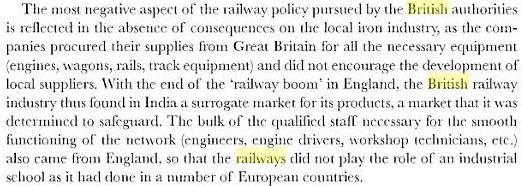
Extract from 'A history of modern India, 1480-1950' By Claude Markovits,
page 433. Click on picture for larger text.

Post-independence India continued with this practice – till LB Shastri called a halt to this. In 1956, the Madras-Tuticorin express plunged into a river when when a bridge at Ariyalur (Tamil Nadu) was washed away in floods. 144 (some records suggest 156) passengers died. He resigned from the Union Cabinet – claiming moral responsibility for the railway accident.
This resignation saw LB Shastri become a political legend. This (resignation) also changed the mindset of the Indian Railways. After fresh elections of 1957, one year later, he was re-inducted into the Union Cabinet.
Steadily, over 30 years, Indian railways infrastructure was upgraded, accidents decreased.

What we see today

In 1952, it was decided that IIIrd class passengers deserved fans and light - and it took another 7 years to implement this decision. Elephants used for shunting wagons, box-cars, finally got a respite after WDS-4B shunters were introduced by Chittranjan Locomotive Works in 1969. Safety bars in windows were introduced on night trains in a phased manner over the 1970s. Till then, most trains had open windows leading to passenger-safety issues. Earlier, it meant "getting into a third-class general compartment — through the window, literally pushed in by someone on the platform. Well, now all the windows have a grill provided for the safety of the passengers".
It took a non-Congress Government in 1977 to change the face of Indian Railways. Prof.Madhu Dandavate, the Railway Minister in the 1977 Janata Government started the railway renaissance in India. 3rd class railway travel was abolished. Wooden-slat seats were abolished. Cushioned 2nd class seating system was made minimum and standard. Train time tables were re-configured. Reservation systems improved. Railways started getting profitable.
The de-colonization of Indian Railways began effectively in 1977 – 30 years after British departure. Symbolically, that was also the year that the Rail Museum was set up. The progress after that has been remarkable. Without going into the merits of safety and comfort, today Indians can travel at significantly lower cost. For a US$5, an Indian can travel for 1000 km - compared to nearly US$100 for 1000 km (gold-adjusted dollars).
All this when only 25% of Indians travel by rail at least once a year.
OLD FAITHFUL: An 80-year-old elephant shunting a railway
boxcar in 1945, Picture courtesy - The Times of India,
Dated 27th February, 2010

The benign British

Should we complain so much, if we inherited a decrepit, run down, accident prone, investment starved railway system with outdated technology from the British – though financed by loot from India?
Even though it took India 40 years, to modernize the colonial railway system, we should be thankful. Remember, they could have uprooted the rails, and taken away the wagons and engines. After all, Indian Railways was the biggest scrap iron collection in the world at that time.
Till Lal Bahadur Shastri’s resignation – the poor Indian railway-man was routinely blamed for railway accidents – by his British, and later the Indian bosses also.

Thursday, August 13, 2009

How 1857 changed world history …

A war of a different kind

During the 1857 War against the colonial rule of Britain in India, unable to gain military advantage, British armed forces started using Indian human populations as human shield. For each military success of the Indian armies, the British armies exacted retribution on the local non-combatant populations.

This reign of terror and brutality on home populations disarmed Indian armies and ended the war. A impressive work on this period is by Amaresh Misra – a film critic and journalist, who was moved sufficiently to research for a few years, because, “Since 1957, no Indian has written a comprehensive account of the Revolt. Indian historians have done a limited work”. Another step in this direction is Parag Tope’s forth coming book, Operation Red Lotus, on the life and wars of Tatiya Tope.

And Britain started a more insidious war – a propaganda war. History started getting twisted, perverted, mutilated – and over the next 100 years, Indian and world history was changed beyond recognition.

Let the games begin

After 1857, racist propaganda and cultural baggage came covertly – to gain better traction at home and in the colonies. For instance, Priya Joshi, a researcher shows that after 1857, book shipments from Britain to India increased by a factor of three.

The death of Semiramis

In this propaganda campaign, the most interesting bit is the cold-blooded murder of the historical Semiramis. Readers will find that Semiramis as an Assyrian Queen till the 1850-60 period Western histories.

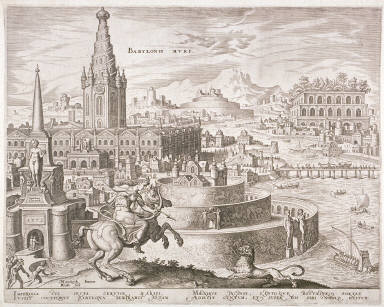
Edward Degas and Guercine made Semiramis the subject of their paintings. Calderon used her character in his plays. Mozart died before he could complete his melodrama based on Semiramis. A 16th century painter, Philip Galle used Semiramis and Babylon as the subjects of his paintings.

Mired in legend and prejudice, Semiramis is discredited in modern Western history – especially starting from 1853-1857. Her very existence denied, accused of incest, Semiramis has been tarred and condemned to the rubbish heap of modern history – and the Bible. Semiramis established an empire that lasted, practically till WW1. Some 300 years, after the reign of Semiramis, the Assyrian Empire passed into Persian hands. From the Persians, into Alexander’s lap.

Suddenly, from 1860 onwards, Western history started treating Semiramis as a wanton, decadent, probably mythical, a perverted sluttish character.

The reason. Semiramis biggest defeat was at the hands of Indians. And soon after her defeat was the defeat of Cyrus the Great at the hands of Indians again. And before that were the Battles of Meggido and Kadesh, in which Indic armies confronted the Slave Empire of the Egypt. In colonial periods such an Indian history would have been very inconvenient for the Raj.

The Alexander mythos

Alexander’s raid of the Persian Achaemenid Empire, finally turned out to be a overthrow of the Achaemenid dynasty, usurpers of the Assyrian Empire. Unable to make headway into India, as the Indian Brahmins had helped and influenced Indian princes to organize and support the Indian war against Alexander. Greek sources cite, after this realization, at ‘The City of Brahmans’, Alexander massacred an estimated 8000-10,000 of these non-combatant Brahmans.

Alexander’s massacres in India, a colonial historian informs us (without naming a source), earned him an “epithet … assigned (to) him by the Brahmins of India, The Mighty Murderer.” This Indian Brahmanic characterization of Alexander, commonly taught to English schoolchildren and present in English college texts, as The Mighty Murderer, curiously disappeared from Western-English texts soon after 1860 – and instead now “a positive rose-tinted aura surrounds Alexander” … !

Since Indian texts were completely silent about the very existence of Alexander, colonial Western historians had a free run. Using hagiographic Greek texts as the base, Alexander became the conqueror of the world.

Max Mueller – Son of Hegel

Behind this propaganda was possibly a man who is much admired (wrongly) in India today – Max Mueller. For instance in Max Muller’s colonial propagandist history, when it comes to Indian triumphs over Semiramis, she becomes half legendary. Yet in another book, the same Semiramis becomes one of ‘the great conquerors of antiquity.’ In a matter of a few pages, he dismisses Indian history completely, in a half-Hegelian manner.

Aiding Max Mueller, English poets were press ganged into this propaganda war. Matthew Arnold wrote how, India, a ‘nation of philosophers, from

“The East bowed low before the blast
In patient, deep disdain,
She let the legions thunder past,
And plunged in thought again.”

Matthew Arnold’s influence in Indian education can be gauged by the fact that Indian-English language poetry was for long called derisively as Matthew Arnold in a Saree”. Just before 1857 War, the works of another ‘influential’ poet, John Keats, became popular. In his hubristic haze, Keats wrote how,

The kings of Ind their jewel-sceptres vail,
And from their treasures scatter pearled hail;
Great Brahma from his mystic heaven groans,
And all his priesthood moans,
Before young Bacchus’ eye-wink turning pale.

Much of modern history’s debates and questions were born during this time – verily created to wage a propaganda war against India – and the world. India’s cultural stature in the pantheon of world’s societies was reduced to a minimal role – and the Greek Miracle was born.

In the dying days of the Raj

This propaganda war continued well for another 100 years. In the middle of WW2, Britain pulled out a general from the Italian theatre of war and sent him to India – to head colonial India archaeological operations.

One evening in early August 1943, Brigadier General Mortimer Wheeler was resting in his tent after a long day of poring over maps, drawing up plans for invasion of Siciliy. Mortimer Wheeler was invited to become the director general of archaeology by the India Office of the British government in its last years of rule in South Asia … Summoning a general from the battlefields of Europe was an extraordinary measure, an admission both of the desperate condition of Indian archaeology and an acknowledgment of its vital importance. (from The Strides of Vishnu: Hindu Culture … – Google Books).

Amazing!

Why would the glorious British Empire, on which the sun never set, struggling for its very existence, in the middle of WW2, suddenly pull a general back from the battlefield – and put him into archaeology! That too, Indian archaeology. Not Egyptian, not Greek! Especially, when it was clear, that they would be departing from India – sooner rather than later.

Considering what theories came from Mortimer Wheeler’s rather fertile ‘imagination’ and his rigourous archaeological process, in hindsight, from a Western perspective, this was sound decision. There may be the facile answer that the British were, after all ‘searching for history and truth’.

And it led Mortimer Wheeler to remark,

“They demonstrate with astonishing clarity the extent to which the brief transit of Alexander did in fact Hellenize almost instantly vast tracts of Asia populated previously by nomads or semi-nomads and villagers”

It is this one incident which possibly contains answers to many unanswered questions like: -

  1. The amount of energy expended by the West in defending the Aryan Invasion /Migration Theory,
  2. The lack of access to Indian scholars of the archaeological sites in Pakistan
  3. The many myths in Indian history
  4. The clues to the partition of India
  5. The dating problems

et al.

Just why did the world’s foremost imperial power, struggling for its very existence, suddenly pull a general from the battle field, in the middle of WW2 – and put him onto the job of digging dirt.

Only one explanation fits – it had to be a struggle for its own existence at a higher level!

Saturday, August 8, 2009

A war of a different kind

A war of a different kind

During the 1857 War against the colonial rule of Britain in India, unable to gain military advantage, British armed forces started using Indian human populations as human shield. For each military success of the Indian armies, the British armies exacted retribution on the local non-combatant populations. This reign of terror and brutality on home populations disarmed Indian armies and ended the war

And Britain started a more insidious war - a propaganda war. History started getting twisted, perverted, mutilated - and over the next 100 years, Indian and world history was changed beyond recognition.

In fact, after 1857, racist propaganda and cultural baggage came covertly - to gain better traction at home and in the colonies. For instance, Priya Joshi, a researcher shows that after 1857, book shipments from Britain to India increased by a factor of three.

The death of Semiramis

In this propaganda campaign, the most interesting bit is the cold-blooded murder of the historical Semiramis. Readers will find that Semiramis as an Assyrian Queen till the 1850-60 period Western histories.

Suddenly, from 1860 onwards, Western history started treating Semiramis as a wanton, decadent, probably mythical, a perverted sluttish character.

Edward Degas and Guercine made Semiramis the subject of their paintings. Calderon used her character in his plays. Mozart died before he could complete his melodrama based on Semiramis. A 16th century painter, Philip Galle used Semiramis and Babylon as the subjects of his paintings.

Mired in legend and prejudice, Semiramis is discredited in modern Western history – especially starting from 1853-1857. Her very existence denied, accused of incest, Semiramis has been tarred and condemned to the rubbish heap of modern history – and the Bible. Semiramis established an empire that lasted, practically till WW1. Some 300 years, after the reign of Semiramis, the Assyrian Empire passed into Persian hands. From the Persians, into Alexander’s lap.

The reason. Semiramis biggest defeat was at the hands of Indians. And soon after her defeat was the defeat of Cyrus the Great at the hands of Indians again. And before that were the Battles of Meggido and Kadesh, in which Indic armies confronted the Slave Empire of the Egypt. In colonial periods such an Indian history would have been very inconvenient for the Raj.

The Alexander mythos

Alexander’s raid of the Persian Achaemenid Empire, finally turned out to be a overthrow of the Achaemenid dynasty, usurpers of the Assyrian Empire. Unable to make headway into India, as the Indian Brahmins had helped and influenced Indian princes to organize and support the Indian war against Alexander. Greek sources cite, after this realization, at ‘The City of Brahmans’, Alexander massacred an estimated 8000-10,000 of these non-combatant Brahmans.

Alexander’s massacres in India, a colonial historian informs us (without naming a source), earned him an “epithet … assigned (to) him by the Brahmins of India, The Mighty Murderer.” This Indian Brahmanic characterization of Alexander, commonly taught to English schoolchildren and present in English college texts, as The Mighty Murderer, curiously disappeared from Western-English texts soon after 1860 – and instead now “a positive rose-tinted aura surrounds Alexander” … !

Since Indian texts were completely silent about the very existence of Alexander, colonial Western historians had a free run. Using hagiographic Greek texts as the base, Alexander became the conqueror of the world.

Max Mueller - Son of Hegel

Behind this propaganda was possibly a man who is much admired (wrongly) in India today - Max Mueller. For instance in Max Muller’s colonial propagandist history, when it comes to Indian triumphs over Semiramis, she becomes half legendary. Yet in another book, the same Semiramis becomes one of ‘the great conquerors of antiquity.’ In a matter of a few pages, he dismisses Indian history completely, in a half-Hegelian manner.

Aiding Max Mueller, English poets were press ganged into this propaganda war. Matthew Arnold wrote how, India, a 'nation of philosophers', from

“The East bowed low before the blast
In patient, deep disdain,
She let the legions thunder past,
And plunged in thought again.”

Matthew Arnold's influence in Indian education can be gauged by the fact that Indian-English language poetry was for long called derisively as "Matthew Arnold in a Saree". Just before 1857 War, another 'influential' poet, John Keats, in his hubristic haze wrote how,

The kings of Ind their jewel-sceptres vail,
And from their treasures scatter pearled hail;
Great Brahma from his mystic heaven groans,
And all his priesthood moans,
Before young Bacchus' eye-wink turning pale.

Much of modern history's debates and questions were born during this time - verily created to wage a propaganda war against India - and the world. India's cultural stature in the pantheon of world's societies was reduced to a minimal role - and the Greek Miracle was born.

In the dying days of the Raj

This propaganda war continued well for another 100 years. In the middle of WW2, Britain pulled out a general from the Italian theatre of war and sent him to India - to head colonial India archaeological operations.

One evening in early August 1943, Brigadier General Mortimer Wheeler was resting in his tent after a long day of poring over maps, drawing up plans for invasion of Siciliy. Mortimer Wheeler was invited to become the director general of archaeology by the India Office of the British government in its last years of rule in South Asia ... Summoning a general from the battlefields of Europe was an extraordinary measure, an admission both of the desperate condition of Indian archaeology and an acknowledgment of its vital importance. (from The Strides of Vishnu: Hindu Culture ... - Google Books).

Amazing!

Why would the glorious British Empire, on which the sun never set, struggling for its very existence, in the middle of WW2, suddenly pull a general back from the battlefield - and put him into archaeology! That too, Indian archaeology. Not Egyptian, not Greek! Especially, when it was clear, that they would be departing from India - sooner rather than later.

Considering what theories came from Mortimer Wheeler's rather fertile 'imagination' and his rigourous archaeological process, in hindsight, from a Western perspective, this was sound decision. There may be the facile answer that the British were, after all 'searching for history and truth'.

And it led Mortimer Wheeler to remark,

"They demonstrate with astonishing clarity the extent to which the brief transit of Alexander did in fact Hellenize almost instantly vast tracts of Asia populated previously by nomads or semi-nomads and villagers"

It is this one incident which possibly contains answers to many unanswered questions like: -

  1. The amount of energy expended by the West in defending the Aryan Invasion /Migration Theory,

  2. The lack of access to Indian scholars of the archaeological sites in Pakistan

  3. The many myths in Indian history

  4. The clues to the partition of India

  5. The dating problems
et al.

Just why did the world's foremost imperial power, struggling for its very existence, suddenly pull a general from the battle field, in the middle of WW2 - and put him onto the job of digging dirt.

Only one explanation fits - it had to be a struggle for its own existence at a higher level!

Tuesday, August 4, 2009

As the sun set on the Raj ...

One evening in early August 1943, Brigadier General Mortimer Wheeler was resting in his tent after a long day of poring over maps, drawing up plans for invasion of Siciliy. Mortimer Wheeler was invited to become the director general of archaeology by the India Office of the British government in its last years of rule in South Asia ...Summoning a general from the battlefields of Europe was an extraordinary measure, an admission both of the desperate condition of Indian archaeology and an acknowledgment of its vital importance. (from The Strides of Vishnu: Hindu Culture ... - Google Books).

Amazing!

This is one question that has long puzzled me!

Why would the glorious British Empire, on which the sun never set, struggling for its very existence, in the middle of WW2, suddenly pull a general back from the battlefield - and put him into archaeology! Especially, when it was clear that they would be departing from India - sooner rather than later.

Just why

Considering what theories came from Mortimer Wheeler's rather fertile 'imagination' and his rigourous archaeological process, raises even more questions. There may be the facile answer that the British were after all 'searching for history and truth'.

It is this one incident which possibly contains answers to many unanswered questions like: -

  1. The amount of energy expended by the West in defending the Aryan Invasion /Migration Theory,

  2. The lack of access to Indian scholars of the archaeological sites in Pakistan,

  3. The many myths in Indian history,

  4. The clues to the partition of India

  5. The dating problems
et al.

Again ... just why?

Just why would an imperial power, struggling for its very existence, suddenly pull a general from the battle field, in the middle of WW2 - and put him onto the job of digging dirt.

Only one explanation fits - it had to be a struggle for a existence at a higher level!

Tuesday, February 12, 2008

The Indian Voter

The Indian Republic has spawned the most unique democracy in the modern history. Eminent cultures and nations, when faced with 20th century Anglo-Saxon power of industry, colonial exploitation, global financial manipulation tried 'copycat' versions of European nations. Prime examples of those were Russia, Turkey and China.

Russia - Westernising Since Peter The Great

Peter the Great, (of the Naryshkin family) co-ruler of Russia, (along with Ivan of the Miloslavsky family) ruled from 1682-1725. For more than 40 years, his agenda was to create Russia in the Western mould. His travels to Germany, Britain, Sweden (before becoming a Tsar) shaped this agenda. One of the first things he did after becoming a Tsar was to ask his boyars (Russian nobility) to shave their beards! Catherine The Great continued this during her reign from 1762-1796. For the next 125 years, Russia vacillated between a medieval country and modern western country.

Now, the imprisoned oil tycoon Mikhail Khodorkovsky takes pains, who at one time nursed political ambitions, earnestly says,“...I’m convinced that Russia is a European country, it’s a country with democratic traditions ...".

China - Mao & Sun

In the 20th century, one of the first countries to become a ‘copycat’ states was China. China, led by Sun Yat Sen, (original name Sun Wen and started calling himself Yat-sen; Chinese call him Sun Zhongshan), was the first major power in Asia which tried going down the western path. Sun Yat Sen decided to westernise and make China into a Republican democracy.

Chinese were made to cut their queue - pleated hair braids. This diktat was enforced in 20 days time. Sun Yatsen and later Mao Ze Dong made the Chinese change their dress styles too. The effect of this westernisation - an enduring sense of followers. The Chinese add a western name to their Chinese one - Michael Tang, Bruce Lee, Jerry Yang, Tommy Tang, Tommy Chi. In Hong Kong and Macao, white tourists are royalty. Chinese companies routinely parade White, Western investors - and the Chinese investors follow. Western marriage ceremony, Chinese couples think, is very romantic. The Christian Church wedding is common in China.

Not that Indians are too far behind - consider Steve Sanghi, Paul Parmar, or the best of them all Bobby Jindal.

Ataturk’s Turkey

Turkey - led by Mustafa Kemal Ataturk was the next ‘copycat’ attempt at westernisation. After WW2, the victorious allied powers dismantled the Ottoman Empire. Turkey was reduced to a rump state. Atatürk (much like Hamid Karzai) was ‘installed’ by Western powers.

Thereafter, Turkey has lurched from crisis to another. Post WW2, it has been mostly ruled by military dictatorships. From being a arbiter in Europe, it has become a supplicant, begging for entry into EU. Instead of the queue in China, - it was beards in Turkey. Atatürk enforced a new dress code on the hapless Turks - and the traditional fez was banned. Stop wearing the fez or else …

Japan - Democracy By LDP

Although Japan never 'westernised' in the manner of the Russia, China or Turkey, Japan's democracy is an external construct. After the Japanese surrender in WW2, Supreme Commander of Allied Powers, Douglas MacArthur ruled over Japan. A translator's mistake started the Japanese to work on a new constitution. MacArthur rejected the draft submitted, saying it was "nothing more than a rewording of the old Meiji constitution." MacArthur put his own staff on the job - and supervised the writing of the Japanese Constitution. A new draft was written in the next 10 days.

From 1955, when the LDP was formed, it remained in power for the next 38 years. In 1993, for the first time, a non LDP Government was formed - The Shinseito (Japan Renewal Party) came to power. Compare that with India's first change which occured within 26 years.

After a change in the ruling party, the Japanese miracle ended. A 10 year economic slump followed.

Indian Democracy

The Indian Voter is a very unique specimen. Forged out a feudal-colonial regime, he was coached by Gandhiji. Time and again the Indian Voter has voted in a very perceptive manner - rationally and without emotion.

1956 Election

In the very second General Elections of 1956, two leftist parties, gained 19.33% of popular vote, formed the world's first elected Communist Government.

Nehru, a legend in his own life, venerated and loved by the people he ruled, was given a warning. Perform or else.

Nehru thereafter went down the socialist road. Possibly, looking at the 'ship-to-mouth' economy, the socialist road was the humane answer. To a society coming out of the nightmare of colonial exploitation, the State as a parens patriae was a plausibility - as most voters were too poor and unable to take care of themselves.

The Left parties were given an opportunity. The Leftists did not live up to their promise. Apart from regional mandates, the Left were not given any major opportunity.

1969 Election

Indira Gandhi had sacked Morarji Desai as the Finance Minister over his obstinacy - on the Gold Control Act, bank nationalisation, etc. It was also rumoured that he was in CIA pay - a plausible allegation, as the rickety structure of Bretton Woods was propped up by the Indian ban on gold imports by Morarji Desai. Other disgruntled Congress party members had split from the Congress to form the Congress(O).

The voter saw through the disgruntlement on one and Indira Gandhi's imperious ways were beginning to show on the other. The Indian Voter gave her a razor thin majority - and the Congress(O) sulked as a major opposition party. The Indian Voter did not have any appetite for the negative agenda of Congress (O).

1971 Election

Indira Gandhi after a dramatic war in Bangladesh War (the largest PoW capture in the history of modern warfare by any country) and with an electrifying slogan - Garibi Hatao, called for elections. This decisiveness and a weak opposition won her the election.

Indian Muslim Women Voting

1977 Election

Within 26 years after the first election in 1952, India changed its favorite political party. Post 1975 Emergency, India after being ruled by diktat, chose to remove Indira Gandhi. Opposition parties, for the first time in free India, gave the Indian Voter a clean choice. And the voter decided. The Indian Voter chose change.

Indira Gandhi was voted out.

1980 Election

A chastened Indira Gandhi was voted back to power. A vengeful opposition party was sent into the wilderness. India took it first steps towards liberalisation. New industrial capacities for cars and scooters were approved. The economy slowly started getting unshackled.

Cartoon On Indian Elections1984 Election

After Indira Gandhi's assassination, Rajiv Gandhi won a landslide victory - on a so-called sympathy wave. But the Indian Voter simultaneously voted for a different party for the local, state level Government. So, there was a national Government led by Rajiv Gandhi and the opposition party won the election in Haryana!

Who Is the Indian Voter

Electronic Votinf MachinesHe is poor. He is not the rich Indian. He typically should be swayed by promises and subsidies. But he can be a very perceptive. He has never given the negative agenda of the Leftists a major opportunity.

He is illiterate. He votes with his "heart" or his "caste". He does not understand the "issues". But he did not buy the India Shining story that the BJP, a 'Hindu fundamentalist' party was peddling. Similarly, I doubt if they will back Manmohan Singh's attempt to 'sit at the high table in the global comity of nations."A Poor Indian Woman Voting

This democracy was a home grown democracy, written, managed and nurtured by Indians. There will be many challenges ahead.

Unlike many, I do not believe, this is the end of the road for Anglo Saxon Super-power status - and the Chindia-India-Asia century is not near. But the Indian Voter will live up to the challenge. India's indigenous democracy is not the 'copycat' that others countries tried.