If Dravidian migrated from Africa to India through the Middle East, it could have left traces in Egypt and countries under Egyptian influence as well, explaining the data which led earlier researchers to the thesis of a Dravidian ‘Indo-Mediterranean’ culture. (105) Sergent links Indian forms of phallus worship with Sahel-African, Ethiopian, Egyptian and Mediterranean varieties of the same. The Egyptian uraeus (’cobra’), the snake symbol on the pharaonic regalia, has been linked in detail with Dravidian forms of snake worship, including a priest’s possession by the snake’s spirit. Dravidian cremation rituals for dead snakes recall the ceremonial burial of snakes in parts of Africa. (106) Others have added the similarity between the Dravidian naga-kal (Tamil: ’snake-stone’, a rectangular stone featuring two snakes facing one another, their bodies intertwined) and the intertwined snakes in the caduceus, the Greek symbol of science and medicine. It has consequently been suggested that some Dravidian words may also have penetrated into the European languages. Thus, Dravidian kal, ’stone’, resembles Latin calculus, ‘pebble’, and Dravidian malai, ‘mountain’, resembles an Albanian and Rumanian word mal, ‘rock, rocky riverside’. (107) But this hypothesis is a long shot and we need not pursue it here. Far more substantial is the Dravidian impact on another language family far removed from the recent Dravidian speech area, viz. Uralic. The influence pertains to a very sizable vocabulary, including core terms for hand, fire, house (Finnish kota, Tamil kudi), talk, cold, bathe, die, water, pure, see, knock, be mistaken, exit, fear, bright, behind, turn, sick, dirty, ant, strong, little, seed, cut, wait, tongue, laugh, moist, break, chest, tree; some pronouns, several numerals and dozens of terms for body parts. (108) But it goes deeper than that. Thus, both language families exclude voiced and aspirated consonants and all consonant clusters at the beginning of words. They have in common several suffixes, expressions and the phonological principle of vocalic harmony. As the Dravidian influence, like that of IE, is more pronounced in the Finno-Ugric than in the Samoyedic branch, we may surmise that the contact took place after the separation of the Samoyedic branch. But the main question here is how Dravidian could have influenced Uralic given their actual distance. (via Update on the Aryan Invasion Debate by Koenraad Elst).
Why can’t Western historians get a simple idea in their head? Aryans are from the land of Bharata-ah. Aryan culture is based on values - and not race and language. The single biggest differentiators, between Aryans and other cultures, is slavery. Under Aryadhwaja (the Aryan flag), rulers were expected (as spelt out in Arthashastra) to follow Aryan norms and practices - specially with regard to slavery. And there is no mention of an Aryan race or Aryan language! The Aryan Race is a piece of Western fiction - called history. There were and are, only Aryan values.
History would be a lot simpler - if simplicity is allowed to prevail. Massive invasions and migrations even today, are fraught with risk. Why would people do that 5,000-10,000 years ago. Dravidians are equally and fully Aryan, Mr.Elst. These games of Aryan /Dravidian are neither honest nor entertaining. What is your motivation?
Hittite Kings - with Tamil names
Can’t see beyond your nose, Mr.Elst?
Look at the interesting case of the (at least) three Hittite kings whose name is Mursili. Mursili I (~1620-~1590; also spelled Mursilis). There is no Sanskritic meaning of this name - and most Hittite kings had Sanskritic names.
Based on presumptive vowels, the correct name would be Murasoli, which in modern Tamil means “giver of right and moral advice.” Murai means ‘approved code of conduct’ and soli is to ‘peel’; in Marathi ’solna’ is peeling onions. An extant Tamil magazine calls itself, मुरासोली Murasoli - as also a politician who is known as Murasoli Maran. Mursili-I, (wife’s name Kali), the grandson and successor of the Hittite founder king Hattusili-I, also seemed to be the conscience keeper of the kingdom. Murslili I warned his administrators,
“‘You are about to go to the land, and the blood of the poor man you are not seeking!’
“His porters you do not question. You perform (the wish) of the rich man. You go to his house - you eat, you drink, and he rewards it to you. You take the poor man’s šiēt, (but) you do not investigate his case! Is it thusly that you hold the command of my father?” (KBo 22.1 rev. 34′-31′)
Similarly, the names of some other Hittite kings, like Hantilli and Muwatalli, have not been deciphered till now. These name-meanings will get cleared, if the Tamil meaning of thalli /talli as ‘mother-goddess’ is used. Muwatalli was possibly named after the patron goddess of horse breeding (in Tamil, mawu means horse and talli is mother-goddess). Hantilli is possibly named after the Goddess Annapoorna (han = rice and talli is mother).
But much before that, is another interesting piece of history!
Clay tablets talk of how Sargon captured Khishibrasini, King of Elam” and his son Lukh’ish’an. (Shibirasini /Shivarasini and Lakshman?). Elam was a Dravidian culture and King Shibi is among the legendary kings in the lineage claimed by Chola kings, (suryavanshi clan), and the Tamil name for Shibi Chakravarthi is Sembiyan and the Chola kings took this as one of their titles. Between 2000 BC to 1000 BC, about three kings were known as Ebharat. And before that the regents were known as Sukalmah (Sukarma?).
 Wars and wagers
Which brings another interesting aspect of chariots in Greece.
The chariot was brought to Greece by Pelops (Pallava?) from Anatolia. Pelops had come from Paphlagonia - Pallava + gonia (gonia as a derivative of गृह्या, or gaanv, in modern Hindi).
He established himself - without a war, with a wager. He agreed to race against the the ruler of Elis, Oenamaus, - who fancied his chances in a chariot. The reason for his confidence - a Hittite charioteer, Myrtilus (derived from Hittite name of Mursilis).
Olympics Games & Pallavas?
Pelops won the chariot race - and Hippodamia, the king’s daughter.
A painting of Hippodamia, excavated in Pompei seems to showing her wearing a saree - and another line drawing seems to be showing her using a ‘pallu’ - use of the saree as a head-dress. It is after Pelops that the Pelopinissean plains are named. And Pelops went on to institute the first Olympic games!
Ophir
This was a famous city from which ancient Egypt, Babylon, Sumeria and other Middle East countries imported gold, sandalwood, ivory, gems, (wild animals and birds(peacocks, monkeys). This now seems to be a corruption of the Tamil kingdom of Oviyar.
Oviyar were one of the ruling tribes of South India and Sri Lanka. Ophir (as the Greeks called it and the West knows it) was a kingdom in South India and Lanka - a legend in its own time. Ships sailed from Sopara (modern Nallasoppara) and Lothal.
Elam - and world history
The people of Elam (yes in Tamil, Eelam means homeland), were the first to civilise the Iranian Peninsula in the 2700 BC period. They were contemporaries of the Egyptians, the Mittanis and the Hittites. The Elamites were a significant people till the 800 BC in Persia (modern day Iran). The Elam diety, Inshishunak, probably related to Sheshnag, is shown seated on a throne made up of coiled serpent. And if that was not enough, there are at least four kings named Shuqamuna - the last being King Shuqamuna in 986 BC. Accounting for presumptive vowels, spell it as Shaqamuni - or the more familiar name of Gautama Buddha, Shakyamuni. The Kassites also worshipped Shakyamuni.
Compared to the retributive and vengeful Hammurabi’s code, the Indic rulers of Middle East (the Hittites, Mittanis and Elamites) already had a more liberal and humane legal system. The Elamites were a significant people till the 800BC in Persia (modern day Iran). The Achaemenid Dynasty succeeded the Elamites (Dravidian Indians) in Iran - and the took over the Assyrian Empire. With the change in regime, came a change in the linguistic policy. Elamite-Dravidian language was replaced by Sanskritic-Old Persian.
The Persian linguistic makeover from the Dravidian-Elamite language to Sanskritic-Old Persian however did not change everything. The Elamite element in Zoroastrian revolt against the daiwas (devas), continues today in Elamite-Dravidian-Tamil Nadu, where asura kings like Ravana and Neduncheziyan are respected.
Silappadhikaaram - Nebuchadnezzar and justice
One of the most prominent rulers of Babylon was Nebuchadnezzar (as spelt in English). Replace ‘b’ with ‘d’ and you are very close the Tamil name of Neduncheziyan (Nedunchedianuru) - a current and modern Tamil name.
Interestingly, Neduncheziyan is more famous as the fabled erring Pandyan King in the Tamil classic - Silappadhikaaram. The earliest legend on justice in India is Silappathikaram (Tamil: சிலப்பதிகாரம்). Written by Ilango Adigal /Elangovadigal, supposed brother of Cheran Senguttavan. In the famous play, Silappadhikaaram, (also Silappatikaram) was about miscarriage of justice. The protagonist in the play is King Neduncheziyan.
Neduncheziyan’s mistaken justice, brings him grief and finally death. Neduncheziyan is overshadowed by the other King - Cheran Senguttuvan. It is believed this Tamil classic, written by Jain Saint, Ilangovadigal /Elangovadigal, was Cheran Senguttavan’s brother. And Kannagi, the heroine of Silappadhikaaram, is a popular Japanese anime character - along with Muthu.
Nebuchadnezzar and Dravidians
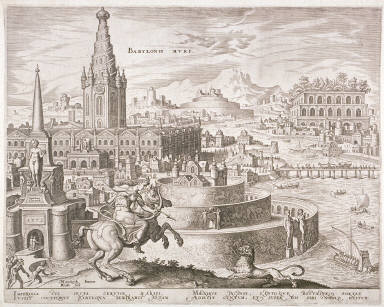
There are at least four Nebuchadnezzars - but we are interested in two of them. The first was Nebuchadnezzar I (ca1126-ca1105) who invaded Elam (the Dravidian rulers of modern Iran). But it was Nebuchadnezzar II, who commissioned one of the wonders of the ancient world - The Hanging Gardens of Babylon - for Amytis, his homesick Elamite princess. Amytis, the daughter of the Median King, (a neo Elamite King), longed for the greenery of her homeland. A prominent ruler of Babylon, Nebuchadnezzar-II, 605-562 BC, (as spelt in English) not only married an Elamite princess, but also took on an Elamite name (related to the Dravidian languages).Nebuchadnezzar III (Niditu-bel), who rebelled against Darius I of Persia in 522 BC and Nebuchadnezzar IV (Arakha), who rebelled against Darius I of Persia in 521 BC are the other two.
From India To Babylon and Russia
Post colonial historical revision is proposing new theories. New archaelogical evidence supports history that shows Aryans moved from India to the Anatolian plains and established the Sumerian, Mesopotamian, Babylonian cultures of Elam, Mitannites, Kassites along modern Syria to Turkey. The Elamites, Mittanis, Hittites competed and traded with the Egyptians.
Usually, we look for Indian history in India. But there is a Indian history outside India, which show India to be completely different that what we have always thought it to be - especially Dravidian history.
Colonial historians first split Indian history into Aryan and Dravidian history. Then dismissed Dravidian history as subordinate and lesser than Aryan on the basis of the Aryan Invasion Theory. Now that the Aryan Invasion /Migration Theory does not have a leg to stand on, the contribution by the Dravidians along the दक्षिणपथ dakshinapatha becomes more important to the West.
And it is this part of Indian (Dravidian) history, which the West is trying to usurp - having been forced to give up the Aryan Invasion /Migration Theory.
Along the Dakshinapatha दक्षिणपथ
The other part to Indian history - which today influences and touches half the world. This history is full of wealth, military successes and a spread which taken India deeper than any other civilisation in the world. While the previous history was along the उत्तरपथ uttarapath, this story lies along the दक्षिणपथ dakshinapatha.
Its starts at Kerala, a highway across Nagpur Jhansi, Gwalior, Delhi ,Kashmir and ends in modern Iran. This history and geography is loosely dominated by the Dravidian segment of India.
There is (at least) 3000 year old history that Tamil language has, which makes it one the oldest, living language. Of course, the division between Aryan and Dravidian history is a Western creation. Arya was never around race, religion or language. It was about values. Noble values.
Languages related to Tamil and Dravidian linguistics are in use even today in Pakistan, where the Brahui tribe speaks a related version of the Tamil language. The Brahuis have marriage preferences which are similar to South Indians (cousins preferred in marriage) - rather than North Indians.
The Dating Imbroglio
Historical dating till the 1960’s was based on a matrix of archaeology, books, records, events, cross-indexing, astronomy. In most cases, all these factors were NOT present, resulting in a significant element of guess - work - and a major element of vested interests.
The two point agenda was the maintenance of the Greek Miracle - motivated by desire to use history as a colonial and exploitative tool. And the other item on the agenda was the proving of the ‘correctness’ of Biblical events - which was motivated by a racial agenda to prove Western racial superiority.
Modern history, is now caught between the Greek Miracle History School, which has stuck to the Sumer->Turkey->Egypt->Greece->Rome->Europe–>West-Is-The-Greatest Axis and the Velikovsky School which is stuck to proving that the Bible is indeed the Last & Only Word.
In 1960s, came new tools to assist archaeological dating system - the the Carbon-14 and the Bristlecone Pine tree-ring system - as well as others. Even this has been been distorted by calibrations, aberrant data and acceptable readings - all the time maintaining a veneer of secular and objective history. Traditional Western historians from both the schools dont want to change - as whole libraries of history based on theories of Western superiority will become redundant.